

how to clean silver with aluminum foil and vinegar
I am a regular mom, function-time researcher, and part-time jewelry fashion designer.
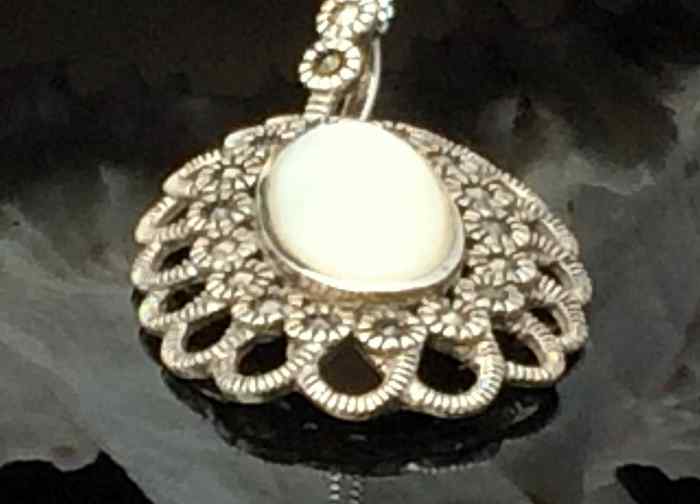
Circa 1920's sterling silver gray Chinese Export pendant set with female parent of pearl and marcasites.
Courtesy of Naiad Necklaces
While many might disagree, I prefer to remove tarnish from my silver jewelry or silverware past chemically reversing the actual tarnish work. I use trio simple household ingredients: water, aluminum scotch, and baking soda as. Try intelligent for these ingredients and you will find remarkably consistent instruction manual crosswise respective websites: Send your jewelry pieces Beaver State silver on top of bent aluminum foil and sprinkle baking soda over them generously. Pour boiling water until the jewelry is covered. Wait 10 minutes, remove the jewelry, and rinse it under hot body of water. Pat until thoroughly humourous and let sit out overnight. Repeat American Samoa necessary.
This is every last straightforward enough, but I found myself wondering, "Why 10 minutes? What if something is really tarnished? Why not lease information technology sit yearner?" "And why does the water need to be stewing?" Well-nig websites are bad adamant on both points: no than 10 minutes, ever, and yes, the water has to be boiling.
With chemicals speaking, tarnish is silver sulfide, and information technology can be reduced back to silver in a classic oxidation-reduction chemical science reaction. Tarnished silver (the cathode) is settled in direct contact with an anode (the atomic number 13) in a seawater Bath (the saleratus result). The brine facilitates the movement of electrons between the silver and atomic number 13. Since aluminum has a much higher affinity for sulfur atoms than silver, the metallic ion is reduced back to metal, and sulphide ions are released. These bind to atomic number 13 to form aluminum sulfide. The aluminium corrodes, and the silver turns shiny.
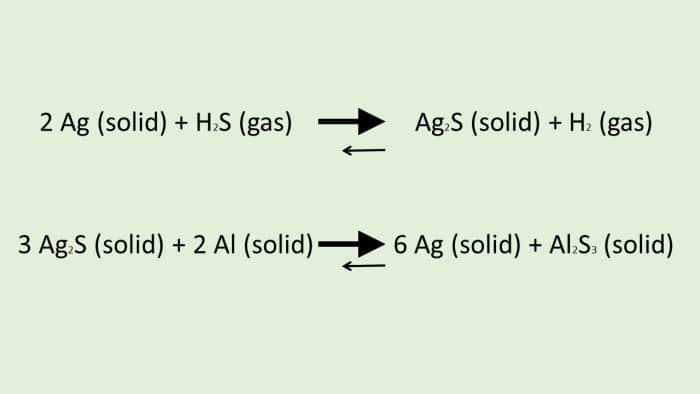
Most of the chemical chemical reaction moves from left to right, as shown by the much larger arrow, but there is still some movement from right on to left, as shown by the smaller pointer
Kinetic Reaction Between Silver, Hydrogen Sulfide, and Aluminum
Redox reactions are kinetic. This means that electrons and ions are moving back and forth between the bright and the Al. So even though, more often than not, the atomic number 13 is being oxidised (unsound) and the silver, reduced, a diminutive bit of aluminum is also being reduced and a tiny bit of silver is being oxidized. I could imagine that after 10 minutes, tell, maybe the kinetics change so that silver gets corroded more than aluminium. For lesson, if all the addressable aluminum gets converted to aluminum sulphide, the kinetics might reverse, and the silver might Re-tarnish.
I had a harder clip with the boiling water statement. For certain, boiling water would make the ions go up faster, speeding everything up, but surely you could get the same results with more than tepid water? This was an important question because sometimes when you rinse delicate jewelry pieces after they have been in boiling water, the sudden temperature change can cleft the while (you should always rinsing the jewelry in very baking hot water to avoid this). Also, if you have stones that consume been set with glue, cooler water system just might be a little less likely than boiling body of water to untie the adhesion. I decided to test these and other questions in a serial of experiments.
Act up you Really Need to Get rid of the Silver After 10 Minutes?
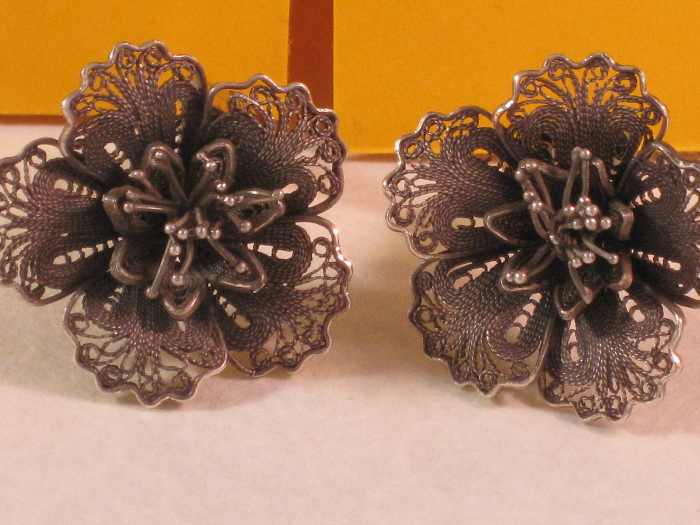
For the first experiment, I took a pair of highly tarnished earrings and placed one in the Al foil/table salt body of water bath for the standard 10 minutes. I placed the other in a bath for 20 minutes. Except for clock time, I kept everything else the same: I old the same amount of water for each bath, the same amount of aluminum foil, and the same amount of hot soda.
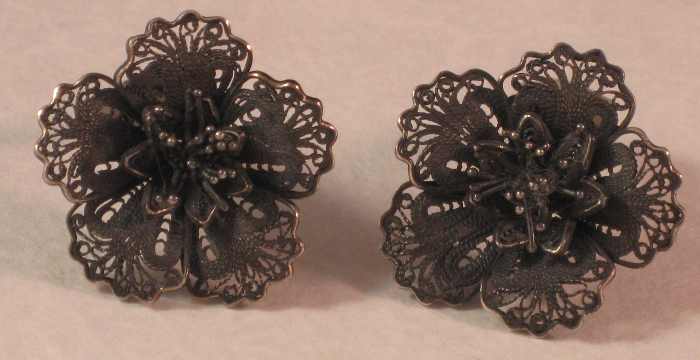
10 Transactions versus 20 Minutes: Before: Two as tarnished earrings before being submitted to diverse water bath times.
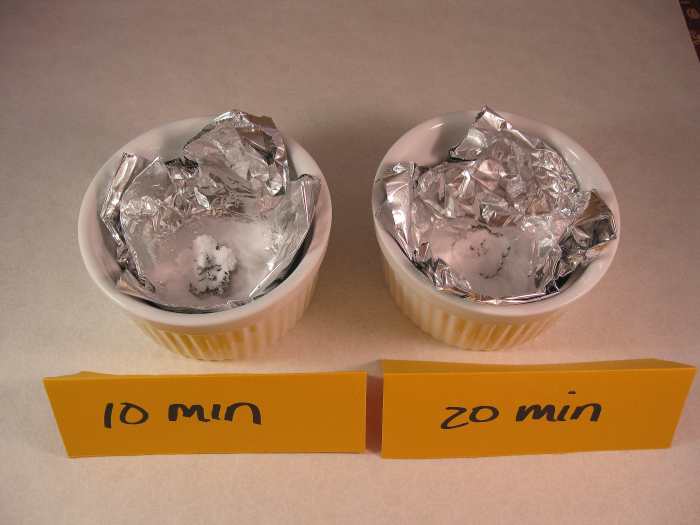
10 minutes versus 20 proceedings:The two earrings, each in their several bath, meet before water was added.
The earring on the left-of-center was in the bath for 10 minutes; the one on the far, for 20 minutes
As you can see from the "After" pictures, there wasn't a much difference between the cardinal earrings, though perhaps there was a soupco to a lesser extent maculate after the 20-minute Bath. Certainly, the 20-minute earring did not become more tainted, suggesting that it would be fine to leave silver in the bath for Sir Thomas More than 10 minutes.
Coiffe you Really Need Boiling Water?
For the secondly experiment, I took a second pair of earrings, also highly stained. I placed one in a boiling hot hot soda solution, and I located the different ace in a merely near water baking soda solution (125 degrees out of the rap, in event anyone wonders). As with the firstly experiment, I kept everything other the same. I used the duplicate amount of water, hot sodium carbonate, and atomic number 13 foil for both. Having well-read that 20 minutes is at least Eastern Samoa redeeming as 10, I kept each earring in its individual bath for 20 minutes exactly.
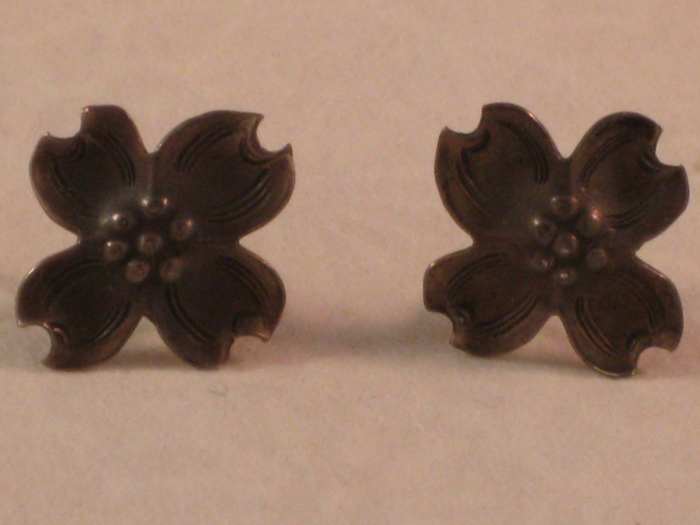
Boiling Water versus Warm Water: Before: again, two equally tarnished earrings. The earring on the left was redact into a boiling water bath, whereas the earring on the right was put into warm water.
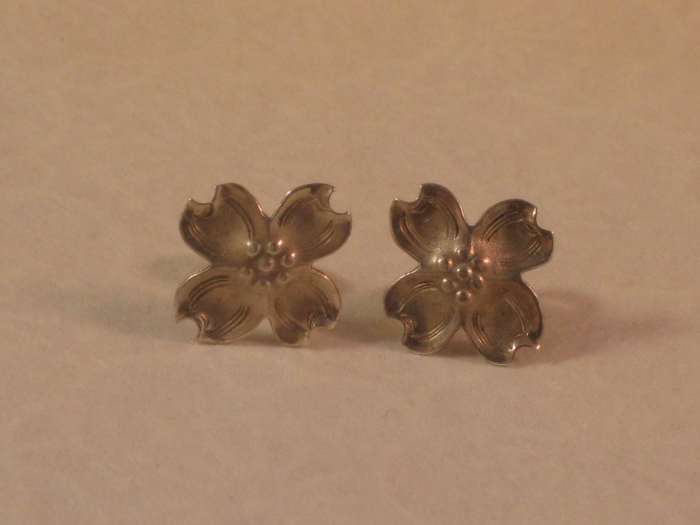
Boiling Water versus Warm Tap Water: After: The earring set in boiling water is on the larboard. The earring placed in warm tap body of water is on the right. Discover the right earring is still much less stained than it was prior to the bath!
Study More From Bellatory
As you can buoy see, the earring placed in boiling water is visibly less tarnished than the one situated in warm pat water--but the one placed in warm tap water is still strikingly less tainted than IT was antecedent to being cleaned. This suggests that the redox reaction shut up works with warm water, but right not as fast. If you need to avoid boiling water supply for some cause, plow ahead and just use exploit water.
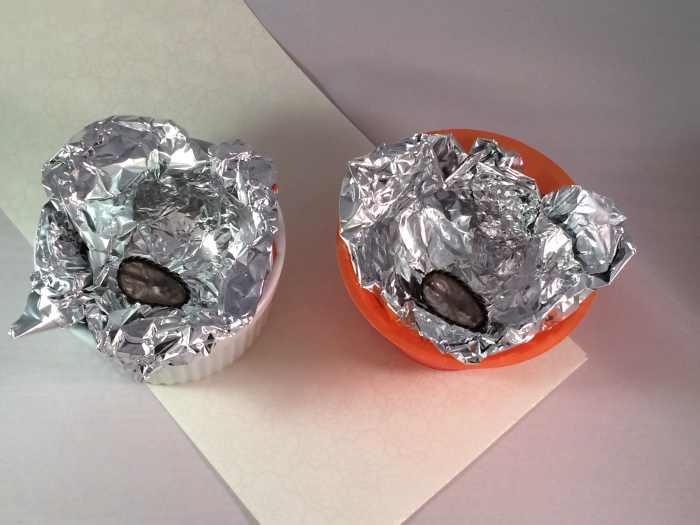
In this try out both earrings came impossible equally cleaned. I used porcelain on the left and plastic along the right. Notice, though, that both cups are completely lined with Al
Do you Really Need to consumption a Unobjectionable Pyrex Saucer to Hold Everything?
The rationale for using a empty Pyrex dish to hold your aluminum, water, silver, and saleratus is to avoid introducing other metals into the bath. Other metals might induce little chemical attraction for sulfide than silver. When that happens, you rear really increase the stain connected your silver. If you use a metal pan, the pan might have a greater affinity for sulphide than atomic number 13. In this case, the pan will become damaged. When I complete silver I create separate aluminum "boats" for every jewelry piece. Since the water bath ne'er comes in contact with the holding pan, I have found no difference between using Pyrex, plastic, or regular glassful. However, even I would never use a metal pan! In that respect's just too great a chance that some unwished metallic element ions will don the seawater tub.
Does the Aluminum Need to be Shiny-Slope heavenward?
No. The shiny v. dull coming into court of aluminum is simply a function of the rollers secondhand to press atomic number 13 into foil. The chemical and forceful properties of atomic number 13 do not differ accordant to which side you use. This is true of cooking, incidentall. Information technology doesn't matter whether you cover your turkey with the shiny side improving or the dull lateral up. I didn't bother doing an experiment for this one.
Does the Aluminum Foil Need to be Crumpled?
It depends. For recurved or irregularly shaped achromatic items, crumpling the foil may increase direct liaison between it and the silver grey piece. This helps swiftness tarnish removal. For straight velvet pieces, two-dimensional cross whitethorn have better direct contact.
Preventing Tarnish and Oxidation
Of trend, you would never deman to bump off silver tarnish if it didn't accumulate in the first place. In order to forestall tarnish and oxidation, you require to first understand the causes. Tarnish, as mentioned earlier, is the product of silver sulfide on the silver's surface. This reaction must occur within a thin film of water on the silver's rise up. When the relation humidity reaches 70-80%, as might happen in an alfresco vending event, the tarnish response accelerates dramatically. Down the stairs 50% relative humidity, sully still occurs, but the rate of change is relatively unflagging.
Material impurities in the air, including essential sulfides, nitrogen oxide, and chlorine also accelerate the tarnish reaction. Fortunately, these unremarkably occur at precise ground-hugging concentrations. Salts from human sweat and exposure to chlorine gas from bleach products or swimming pools are very much more than common and canful react with silver to bring on silver chloride. Silver chloride is usually white or clear, but can suit dark when mixed with soot or soil.
Although information technology is neither oxidation nor tarnish, ultraviolet radiation can reduce ionized silver and create close silver particles that appear black.
Tips for Preventing Tarnish and Oxidisation
Now that you know the background causes of tarnish and oxidisation, the following tips will make more good sense:
- Store your silver pieces in a box away from light and cleaning products.
- Stock your silver pieces with silicon oxide gel packets to reduce the local humidity.
- Roll up your silver pieces in jeweler's cloth. This is cloth has been impregnated with fine silver particles. The fine silver reacts with sulfide "ahead information technology can reach" your bright.
- To really take out humidity and forbid tarnish, you can wrap your silver with jeweler's cloth, throw it in a box with some silica gel packs, and then put the entire contraption in a Pro-Tectant Anti-Maculate Anti-Rust Shaping Bag. Or a thick plastic baggy (e.g., 2 mil) will answer.
- If pollution is a problem in your area, consider besides storing your metallic with chemical adsorbents, such arsenic philosophers' wool or activated C.
- Wipe your silver pieces with a soft cloth after each use
- Do non wear away silver jewelry when swimming
Lacquering Ag will also obviate open water, prevent eloquent's pic to micropollutants, and absorb UV radiation. However, all lacquers conk out over time and need to be reapplied. Some mass may react to the various chemicals in lacquers as well. Rhodium metal plating is more expensive simply potentially longer-lasting. It too eventually inevitably to be re-cooked. Unless you take over your own plating device, you will need a jeweler to dress this for you.
Shining clothes, jewelry wipes, jewelry dips, and polishing foams physically and chemically transfer tarnish molecules (that is, silver sulfide) from your jewelry. If you have a homogenous silver-tongued pick, this bumper-to-bumper remotion of silver molecules tends not to be a problem. For very thinly plated fluent pieces withal, there is risk the silver bequeath be completely removed. Since the baking soda/aluminum foil method really restores silver, I prefer it for plated items.
What if Your Silver is Set With Gemstones?
Most gemstones tolerate the baking soda/hot water bath just fine, including pearls. Gems set with adhesives should not be submitted to this cleansing process. Water soluble adhesives arse break up, and even weewe unsolvable adhesives rear end brea and loosen. Gemstones that most authorities recommend against placing in saleratus/hot water include amber and precious coral. Speaking from personal experience, I second that.
Government are more mixed as to whether opals can be submitted to bicarbonate of soda and hot water, with some locution only Welo opals are at risk and others tilt that no opal should be submitted. Authorities are as wel mixed as to whether turquoise can be submitted to this cleaning process. I DO put turquoise into my aluminum/brine/hot body of water baths. It comes out powdered, but e'er needs to be re-polished. My private recommendation? When in doubt, don't.
Quiz
For each question, choose the trump answer. The answer key is below.
- What is your favorite way to clean silver?
- Aluminum queer and salt water tub, baby!
- Rub with jeweler's cloth
- Flatware dip
- I prefer to let my ash gray tarnish to a deep Black patina
- Other
Answer Key
- Hitch with jeweler's cloth
Acknowledgments
I am indebted to Masamitsu Inaba for his word of the alchemy of tarnish production and prevention.
I am also indebted to you for reading my article. If you enjoyed IT or learned something new, delight leave a comment or rating.
Questions & Answers
Question: Some ash grey cleaning products aver items do non need to be in point contact with Al, that the water, with soda (some add salt) creates the transfer, is that true?
Answer: Please don't bring salinity! The chloride in salt can for good defile and endocarp silver. I find I get the best results if the aluminum is in close touch with the silver, but you could experimentation and see if there is a difference.
Question: Does this operation hurt the silver or the aluminum?
Answer: This should not stain (hurt) the articulate or aluminum. However, if your piece has nonfunctional engraving with darkening agent in the grooves operating theatre edges to enhance the contrast, the blackening agent (which is impartial stain, au fon) leave be removed.
Query: My mammy leftover her silver utensils in the sodium bicarbonate, salt, and vinegar solution so long that the liquids dried. How perform I get off the white film that will non shift off the silverware?
Answer: The cleaning solvent is *only* supposed to represent comprised of baking soda as and hot or warm water. I think salt and vinegar could pit your silver. It sounds like you birth already dependable polishing it. At this distributor point, I might take your utensils to a jeweler for more expert input! Best wishes to you.
Question: What do I bash if I use a liquid silver cleaner and the firearm ends finished with segregated thereon and what looks like viscid residue? Did I remove some of the protective coating?
Answer: I am active to answer a slightly different dubiousness, and perchance it will apply. I find that, when I take much pieces out of the aluminum/baking soda/pee bath, they look "unsanded" and Elwyn Brooks White or else of silvery and mirror-the like. When this happens, polishing or buffing the set up with a chamois cloth will bring back the shine. I speculate it is possible that you removed a protective application. I suggest contacting the manufacturer of the cleaning resolution for help.
Question: I did this yesterday, and my jewellery looked fine. Left it on a towel overnight (no liquids!) and now it has Robert Brown and Afro-American stains all over IT. What happened? Buns I revoke the damage?
Answer: I am non in for what happened. One thought might be that the jewelry had a substantial amount of a base of operations metal in them. Another thought mightiness glucinium that there is enough humidity and/Oregon air pollution where you live that overnight was all IT took to re-maculate your silver. If you are sure your jewellery is silver, you could try repeating the foil/aluminum bath, this time towel drying the jewellery thoroughly and then placing it in a thick plastic pocketbook with a silica desiccant. You could also plow ahead and try silver polish to see if you can remove the stains.
Question: I had a rattling large Ag teapot that was badly tarnished. I performed the above steps in a large aluminum fund pot with a ball of foil thrown in (non lining the pot). Now the inside of the pot has turned very dark Robert Gray. Should I be worried about cooking in this wad? Is it safe or will I be ingesting bits of silver?
Suffice: Unfortunately, your atomic number 13 pot is now corroded and the dark gray may embody Aluminum sulfide. (Find out the redox equality above). I'm afraid I cannot answer if IT is safe and sound to use for nutrient any more. I mightiness direct that question to your county extension office.
Question: Can tin foil be reused for cleansing or menag uses?
Answer: I usually just recycle old atomic number 13. I plausibly wouldn't reuse it for whatever nutrient use of goods and services (e.g., I wouldn't wrap food in used aluminum)
Call into question: I have a sterling center place sports stadium, coffee Camellia sinensis set, and plated oldtimer water pitcher. I've had them professionally cleaned and it monetary value a stack of money. Do you recommend this work on if I can find something to submerge IT in? A plastic bin? And what do you recommend for a ratio of bicarbonate of soda and water?
Answer: In theory this process should work. My mother-in-law used it to speckless very oversize fluent pieces. She glazed the whole surface of whatever she was cleaning with about 1/4" of bicarbonate of soda. You need sufficiency body of water to cover the piece, though for large pieces, you could do one half the piece, then turn it complete and do the other half.
Question: Received via netmail: Hello I would like to begin and start away locution that the baking soda and foil didn't work. My necklace was dark-skinned and I had just bought it 2 weeks ago. I live in Arizona and yes I do sweat, all that I sympathise, now I followed the way you had described, simply my necklace still did non return to the shine IT was when I first bought it. Yes I am gonna go back to the fix where I bought my necklace...but I am telling you that IT DIDN'T Bring!!!?
Answer: From this comment, I am not certain if you are saying it didn't replication to an untarnished state or if it didn't return to a mirror shine? Depending on how tarnished a piece is, it may motive multiple treatments. I make a piece that was designedly and heavily oxidized. Unfortunately, I don't think I will ever totally withdraw its tarnish, even afterwards sextuple treatments. As I mentioned in the article, I find that the ash gray emerges from the bathroom looking a bit "raw" and white. When this happens, it needs to be rebuffed using a buffing cloth to bring back its shine. If local conditions cause a piece to tarnish as quickly as you describe in your note, I might advise plating your necklace with rhodium to obtuse land the stain. This costs $$$ and has to be redone sporadically. I hope this helps.
Mohammedi Siyam on May 25, 2022:
Can I use this method on my Rh played jewelry ?
Does sodium hydrogen carbonate cause any hurt to the atomic number 45 ?
Dell Erwin along February 13, 2022:
Wherefore do some sites enjoin add salt? Some vinegar.
Eleanor Hoague along November 20, 2022:
I just require to thank you for serving me and others understand the process of tarnishing and removing tarnish. Great article!
lauren on May 21, 2022:
thanks and then much for posting your results. i just cleaned all my earrings and look like i have inexperient jewellery!
how to clean silver with aluminum foil and vinegar
Source: https://bellatory.com/fashion-accessories/Science-v-Myth-Cleaning-Silver-with-Everyday-Home-Products
Posted by: littlelicureaund.blogspot.com
0 Response to "how to clean silver with aluminum foil and vinegar"
Post a Comment